Shop By Category
Take 20% OFF Your Order* - Ends Today

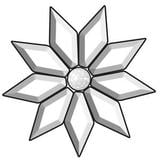
Small Fleur-De-Lis Bevel Cluster

Small Fleur-De-Lis Bevel Cluster
$27.95 USD
Item# 443619   In Stock

Product Features

  • Beveled glass creates beautiful sparkles of light
  • Slanted edges refract light into a rainbow of colors
  • The perfect focal point for your door or window
  • Measures 9" by 9" high, 7 pieces

Product Description

Enjoy the majesty of this traditional European symbol that has graced heraldry, flags and coats of arms for centuries. Create a beautiful beveled panel, door, transom, or window. Clear bevel cluster measures 9" x 9". 7 pieces.

Delphi Tip: Always lay out bevel clusters on pattern before cutting glass to adjust for small differences.

Step-by-Step: Beyond Basic Bevel Design
1. Define your project borders and center lines on graph paper. Arrange bevel pieces.
2. For additional options try repositioning bevels. Add space in between to incorporate cut stained glass or additional bevels. You can even remove pieces to alter the design.
3. Once you find a pleasing design to fit your space carefully trace bevels, then add pattern lines for glass to complete the design.

Customer Reviews

5 out of 5 stars
5 star  
  2
4 star
  0
3 star
  0
2 star
  0
1 star
  0
See all customer reviews
Write a customer review

Product Images from Customers

Be the first to share product images with other customers
5 out of 5 stars
  •   Impressive when completed
By on
Pros : Easy to work with.
Cons : None
Other Thoughts : My completed project was great. The sun bounces off of the bevels and I used black for the surrounding color, then frosted for the outside. It turned out wonderful. Very pleased with my completed project.
Was this review helpful to you?  
5 out of 5 stars
  •   love the bevel
By on
Pros : easy to put into projects and I love the selection.
Cons :
Other Thoughts : Great prices
Was this review helpful to you?  

See all customer reviews
Related Content
My commuting jacket is drying over a kitchen chair, and the cat has come down off the workbench to sniff the sleeve with deep suspicion. Fair enough. Theres a stripe of brown grit up the back, the kind wet roads and mashed leaves throw up all autumn.That grit ends up on brakes too. So heres a short pre-winter check for Defiant riders. Im working from general technique and the JupiterBike product listings, not from my own bike.Why autumn chews through brake padsQuick jargon check. On a disc brake, a metal disc called the rotor is fixed to the wheel hub. Two pads squeeze it to slow you down. They sit in a caliper, the clamp that straddles the rotor.Wet roads carry grit and leaf mush onto the rotor. When you brake, that grit gets trapped between pad and rotor and works like sandpaper, so the same commute wears pads faster

You may also like