Shop By Category
Take 20% OFF Your Order* - Ends Wednesday

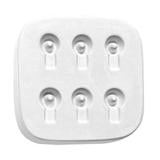
Glass Jump Rings 20 Pack - 96 COE

Glass Jump Rings 20 Pack - 96 COE by Glacial Art Glass
$29.95 USD
Only 10 left in stock - order soon.
Item# X94696   In Stock

  • Designed to fuse seamlessly onto your glass art
  • Comes in a pack of 20
  • 96 COE


Product Description

Jump rings you can fire!
Designed to fuse seamlessly onto your glass art, these glass jump rings create a convenient loop for effortless display. The ultimate solution for easy hanging without the need for drilling. With these Pre-Cut Glass Jump Rings, hanging your creations becomes a breeze, allowing you to focus on the art itself rather than the logistics of display. Comes in a pack of 20. 96 COE.

Project images courtesy of Glacial Art Glass.

Ways to Fuse Bails:

  • Place a small piece of glass spanning your work and the bail.
  • Or slide the bail under your work for a hidden attachment (use this method if your work is 2 layers of 3mm glass thick or more).
  • Make sure the slit side of the bail is facing your pendant.
  • Fuse to 1430°F-1470°F (775°C-800°C).
  • Avoid exceeding 1485°F to keep the bail hole open.
  • If firing above 1485°F, fire your work separately and attach the bail in a second firing.
  • Bails can be used as design elements, not just hangers.

Customers Who Viewed This Item Also Viewed

Customer Reviews

4 out of 5 stars
5 star  
  0
4 star
  1
3 star
  0
2 star
  0
1 star
  0
See all customer reviews
Write a customer review

Product Images from Customers

Be the first to share product images with other customers
4 out of 5 stars
  •   Good Solution for Ornament Hooks!
By on
Pros : These are a great way to attach jump rings to fused glass ornaments! Super easy and sturdy!
Cons : I wish the ends were actually not so close together as I cut them to put on either side of the top of a tip of an ornament (think top of a Christmas tree).
Was this review helpful to you?  

See all customer reviews
Related Content
My commuting jacket is drying over a kitchen chair, and the cat has come down off the workbench to sniff the sleeve with deep suspicion. Fair enough. Theres a stripe of brown grit up the back, the kind wet roads and mashed leaves throw up all autumn.That grit ends up on brakes too. So heres a short pre-winter check for Defiant riders. Im working from general technique and the JupiterBike product listings, not from my own bike.Why autumn chews through brake padsQuick jargon check. On a disc brake, a metal disc called the rotor is fixed to the wheel hub. Two pads squeeze it to slow you down. They sit in a caliper, the clamp that straddles the rotor.Wet roads carry grit and leaf mush onto the rotor. When you brake, that grit gets trapped between pad and rotor and works like sandpaper, so the same commute wears pads faster

Your Recent History