Shop By Category
Final Hours - Save on the Taurus 3 and Max 10

Bullseye Neo-Lavender, Purple And Cobalt Blue On Clear Mardi Gras - 90 COE

Bullseye Neo-Lavender, Purple And Cobalt Blue On Clear Mardi Gras - 90 COE by Bullseye Glass Co.
Unit Size* Price Qty 
small 8" x 10" $26.45 USD
medium 10" x 16"
$52.85
sale $39.75
large 20" x 16"
$105.65
sale $78.95

Item# B4242F   In Stock

Product Features

  • Designed for fusing but also beautiful in stained glass projects
  • Use to create unique, randomized patterns in your artwork
  • Premium handmade Bullseye glass
  • Tested compatible - 90 COE


Product Description

Mardi Gras sheets combine a colorful sprinkling of frits with glass threads of stringers - that fuse, twist and curve under the force of the clear molten glass into a lively cascade reminiscent of Carnival or ticker tape parades. Great for backgrounds or accents! Features a mix of purple and blue on clear base glass. Single-rolled "Catspaw" transparent fusibles have slightly knobby textured backs and pointillistic light transmission. Standard thickness 3mm. 90 COE.

Blue platter by artist Tamara Hartman. From Delphi's Online Artist Gallery.

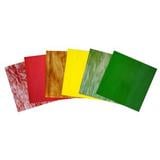
Photo above is a general representation of glass colors. Colors may vary. Sizes are approximate.

Product Details

  • Sheet Size: 35"x20"
  • Thickness: 3mm (1/8")

Customer Reviews

5 out of 5 stars
5 star  
  1
4 star
  0
3 star
  0
2 star
  0
1 star
  0
See all customer reviews
Write a customer review

Product Images from Customers

Be the first to share product images with other customers
5 out of 5 stars
  •   Bullseye Mardi Gras
By on
Pros : very pretty. Nice piece with lots of fruit and stringer. Also I have found this type of clear glass, makes an excellent clear cap in fusing. So the clear parts can be used.
Cons : Kind of heavy, thick, a thinner version would be nice.
Was this review helpful to you?  
1 of 3 people found this review helpful

See all customer reviews
Related Content
My commuting jacket is drying over a kitchen chair, and the cat has come down off the workbench to sniff the sleeve with deep suspicion. Fair enough. Theres a stripe of brown grit up the back, the kind wet roads and mashed leaves throw up all autumn.That grit ends up on brakes too. So heres a short pre-winter check for Defiant riders. Im working from general technique and the JupiterBike product listings, not from my own bike.Why autumn chews through brake padsQuick jargon check. On a disc brake, a metal disc called the rotor is fixed to the wheel hub. Two pads squeeze it to slow you down. They sit in a caliper, the clamp that straddles the rotor.Wet roads carry grit and leaf mush onto the rotor. When you brake, that grit gets trapped between pad and rotor and works like sandpaper, so the same commute wears pads faster

You may also like