Shop By Category
Take 20% OFF Your Order* - Ends Today

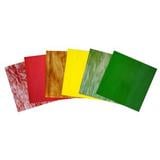
Youghiogheny Earth Tones: Green, Amber, Brown Stipple

Youghiogheny Earth Tones: Green, Amber, Brown Stipple by Youghiogheny Glass
Unit Size* Price Qty 
small 6" x 6" $7.65 USD
medium 12" x 12" $23.95
large 18" x 24" $71.75

Item# YLANDSP   In Stock

Product Features

  • Good for Stained Glass Projects
  • Good for Mosaic Projects
  • Premium Handmade Glass
  • More Colors Per Sheet

Product Description

Hand-made glass offers a unique artistic opportunity as each piece is hand-mixed and will feature color variations and differing patterns. Due to the hand-crafted nature of the glass, the thickness and texture may be slightly irregular and sheets will have in color or thickness and may contain a unique hand-rolled edge. 

Artists recommend premium hand-made Stipple art glass from Youghiogheny. Read what fine glass studios, like Paul Crist, have to say about Stipple glass:

"The remarkable quality about stipple glass is the unique way in which it disperses light. Traditional mottled glasses impart an orangish gray cast to the glass. Stipple glass uses crystalline to disperse light, allowing color to come through the glass unaltered by the opal. Greens are crisp and leafy; reds are pure ruby; pinks and magentas sing with a vibrancy never seen before in art glass. The artists here at Paul Crist Studios have used stipple glass in a number of recent lamps, and attest that it's the perfect glass to make lamps with." - Paul Crist, Owner of Odyssey, and Paul Crist Studios

Photo above is a general representation of glass colors. Colors may vary. Sizes are approximate.

Customer Reviews

5 out of 5 stars
5 star  
  2
4 star
  0
3 star
  0
2 star
  0
1 star
  0
See all customer reviews
Write a customer review

Product Images from Customers

Be the first to share product images with other customers
5 out of 5 stars
  •   Lovely color mix.
By on
Pros : Icy mix of earth tones. Good for follage, grass, shrubs, etc.
Cons :
Other Thoughts : A nice "quiet" color useful for many applications.
Was this review helpful to you?  
1 of 1 people found this review helpful
5 out of 5 stars
  •   Youghiogheny Earth stipple
By on
Pros : Easy to cut, perfect color in landscapes and natural patterns and in lampshades. It is a staple glass in my workshop.
Cons : The thickness of the glass may vary.
Other Thoughts : The stipples are truly a favorite of mine in lampshades as the penetrating light through the glass is soft and glowing. Natural light through a panel with this stipple used for leaves gives them a very sun dappled look. Beautiful.
Was this review helpful to you?  
2 of 2 people found this review helpful

See all customer reviews
Related Content
My commuting jacket is drying over a kitchen chair, and the cat has come down off the workbench to sniff the sleeve with deep suspicion. Fair enough. Theres a stripe of brown grit up the back, the kind wet roads and mashed leaves throw up all autumn.That grit ends up on brakes too. So heres a short pre-winter check for Defiant riders. Im working from general technique and the JupiterBike product listings, not from my own bike.Why autumn chews through brake padsQuick jargon check. On a disc brake, a metal disc called the rotor is fixed to the wheel hub. Two pads squeeze it to slow you down. They sit in a caliper, the clamp that straddles the rotor.Wet roads carry grit and leaf mush onto the rotor. When you brake, that grit gets trapped between pad and rotor and works like sandpaper, so the same commute wears pads faster

You may also like