Shop By Category
Take 20% OFF Your Order* - Ends Today

Oceanside Clear 10" Pre-Cut Circle 3 Pack - 96 COE

Oceanside Clear 10" Pre-Cut Circle 3 Pack - 96 COE by Oceanside Compatible
$57.95 USD
Item# X54904   Availability: Expected to be available December 07, 2026. Subject to change. Pre-order now!

Product Features

  • Create fused glass plates in a snap with Oceanside pre-cuts
  • Decorate with any 96 COE glass frit, stringers and more
  • Clear 10" round pre-cut glass
  • Sold as a pack of 3
  • 96 COE

Product Description

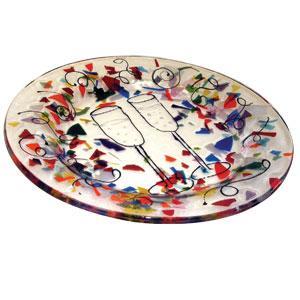
Use Oceanside Compatible glass circle as a base for creating designs in glass using frit, confetti, stringers or even cut glass. Pre-cut clear transparent circle measures 10" in diameter. Great for fusing plates like the oexamples shown. Clear base glass varies. Sold as a pack of 3. 96 COE. 

"10" Scrap Bowl" by artist Catherine Gundlah. "Dichroic Bowl #1" by artist Sonia Smith. "12" Wondering Moose Plate" by artist Charles Hammond. "Cranberry Italian Poppy" by artist Ruth Stephens. All from Delphi's Online Artist Gallery.

Customer Reviews

5 out of 5 stars
5 star  
  3
4 star
  0
3 star
  0
2 star
  0
1 star
  0
See all 3 customer reviews
Write a customer review

Product Images from Customers

Be the first to share product images with other customers
5 out of 5 stars
  •   Perfect circles
By on
Pros : Nice perfect circles to lay some color down on.
Cons :
Other Thoughts : Packed very well.
Was this review helpful to you?  
4 of 6 people found this review helpful
5 out of 5 stars
  •  
By on
Pros :
Cons :
Was this review helpful to you?  
1 of 3 people found this review helpful
5 out of 5 stars
  •   Cheat with Pre-cuts
By on
Pros : I love the pre-cut rounds to get half moons, middle sections and other shapes where you want outer curved edges. These help you get the look.
Cons : None.
Was this review helpful to you?  
3 of 5 people found this review helpful

See all 3 customer reviews
Related Content
My commuting jacket is drying over a kitchen chair, and the cat has come down off the workbench to sniff the sleeve with deep suspicion. Fair enough. Theres a stripe of brown grit up the back, the kind wet roads and mashed leaves throw up all autumn.That grit ends up on brakes too. So heres a short pre-winter check for Defiant riders. Im working from general technique and the JupiterBike product listings, not from my own bike.Why autumn chews through brake padsQuick jargon check. On a disc brake, a metal disc called the rotor is fixed to the wheel hub. Two pads squeeze it to slow you down. They sit in a caliper, the clamp that straddles the rotor.Wet roads carry grit and leaf mush onto the rotor. When you brake, that grit gets trapped between pad and rotor and works like sandpaper, so the same commute wears pads faster