Shop By Category

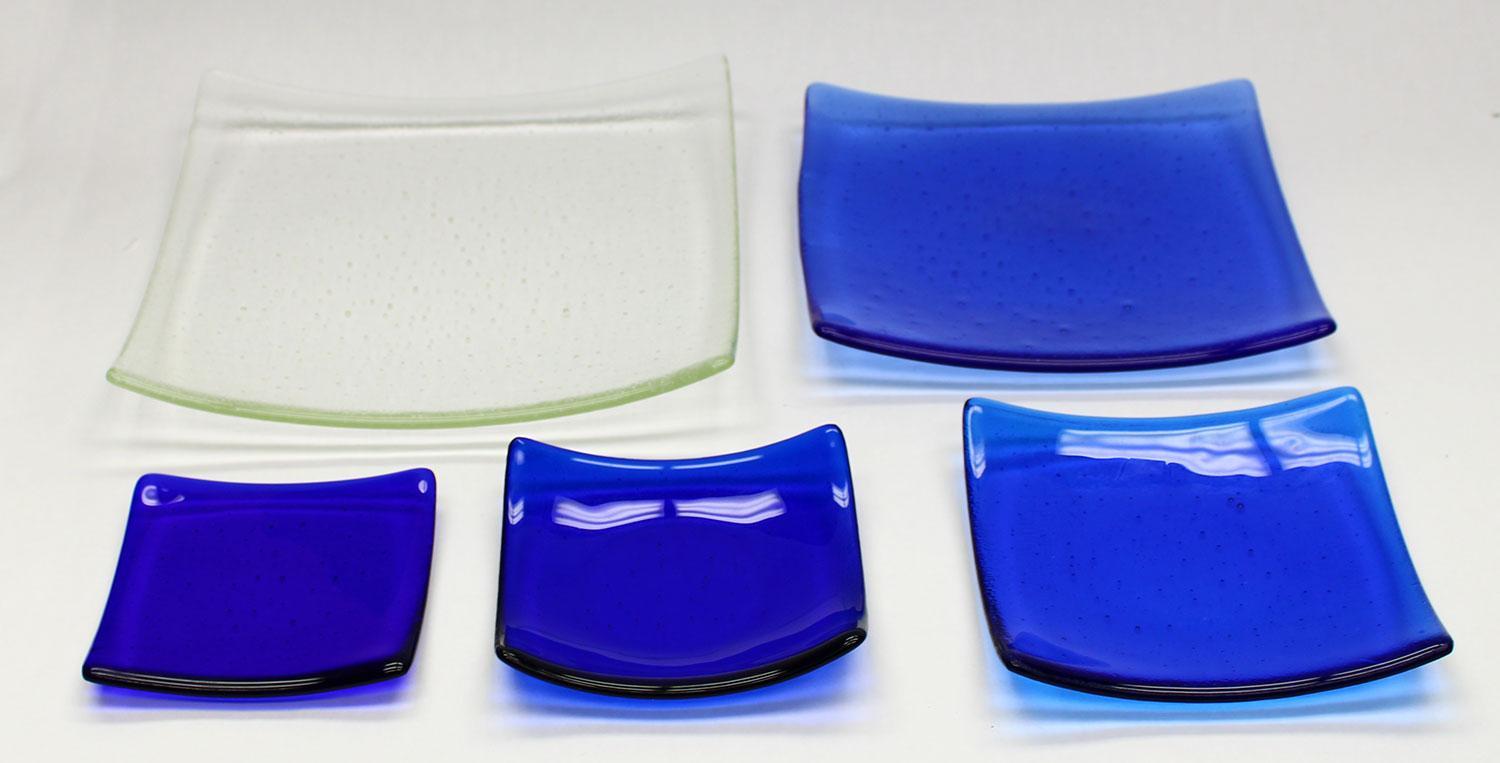
Bullseye True Blue Transparent Double Rolled - 90 COE

Bullseye True Blue Transparent Double Rolled - 90 COE by Bullseye Glass Co.
Unit Size* Price Qty 
small 8" x 10" $16.85 USD
medium 10" x 16" $33.65
large 16" x 20" $66.95

Item# B146430   In Stock

Product Features

  • Double-rolled surface is smoother and minimizes bubble entrapment
  • Premium handmade glass
  • Rich transparent color
  • Tested compatible - 90 COE


Product Description

Create with Premium Bullseye Glass!
Handmade Bullseye glass is ideal for high-quality kiln work. Specifically formulated and tested for compatibility, this glass withstands multiple firings for complex projects without devitrification. The flatter double-rolled surface minimizes bubble entrapment so colors can be layered for custom hues. Standard thickness 3mm. 90 COE.

Bullseye True Blue Transparent is a copper-bearing glass that will react with reactive glass and may react with glass containing sulphur/selenium. 

In the additional images, you'll see a comparison swatch of the unfired glass color (top) and the glass after firing to a full fuse (bottom). Gradient plates by artist Daisy Simon.

Photo above is a general representation of glass colors. Colors may vary. Sizes are approximate.

Customer Reviews

5 out of 5 stars
5 star  
  2
4 star
  0
3 star
  0
2 star
  0
1 star
  0
See all customer reviews
Write a customer review

Product Images from Customers

Be the first to share product images with other customers
5 out of 5 stars
  •   True Blue Indeed
By on
Pros : this primary blue color is a staple in my studio
Cons :
Was this review helpful to you?  
3 of 7 people found this review helpful
5 out of 5 stars
  •   Color as shown
By on
Pros : Of the five sheets of transparent we recently ordered, this is the only one that wasn't super, super dark, and basically black. It's dark, but it's clearly blue
Cons :
Was this review helpful to you?  
4 of 8 people found this review helpful

See all customer reviews
Related Content
My commuting jacket is drying over a kitchen chair, and the cat has come down off the workbench to sniff the sleeve with deep suspicion. Fair enough. Theres a stripe of brown grit up the back, the kind wet roads and mashed leaves throw up all autumn.That grit ends up on brakes too. So heres a short pre-winter check for Defiant riders. Im working from general technique and the JupiterBike product listings, not from my own bike.Why autumn chews through brake padsQuick jargon check. On a disc brake, a metal disc called the rotor is fixed to the wheel hub. Two pads squeeze it to slow you down. They sit in a caliper, the clamp that straddles the rotor.Wet roads carry grit and leaf mush onto the rotor. When you brake, that grit gets trapped between pad and rotor and works like sandpaper, so the same commute wears pads faster