Shop By Category
Take 20% OFF Your Order* - Ends Today

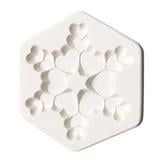
Christmas Tree Casting Mold

Christmas Tree Casting Mold by Creative Paradise
Price $82.95
Your Savings: - $25.00
Your Price: $57.95 USD   (31% Off)
Only 3 left in stock - order soon.
Item# 80533   In Stock

Product Features

  • Mold measures approximately 9-1/2" x 11"
  • Ceramic mold can be used over and over
  • Use with Conical Draper (#80567) and Lamp Base (#806267) to create a holiday lamp
  • Use with Triangle Slumper (#80568) to create a festive dish

Product Description

Create festive glass Christmas trees with the Christmas Tree Casting Mold. Fill this durable ceramic casting mold with glass frit and scrap glass to create stunning holiday castings. Apply boron nitride spray or casting mold primer before use. Mold measures approximately 9-1/2" x 11". Fill weight 446 grams.

Use with Conical Draper (#80567) and Lamp Base (#806267) to create a holiday lamp. Use with Triangle Slumper (#80568) to create a festive dish. Draper, lamp base and slumper sold separately. Potential projects shown in additional images. Projects by artist Stephanie O'Toole, courtesy of Creative Paradise.


Related Products

Customer Reviews

5 out of 5 stars
5 star  
  2
4 star
  0
3 star
  0
2 star
  0
1 star
  0
See all customer reviews
Write a customer review

Product Images from Customers

Be the first to share product images with other customers
5 out of 5 stars
  •   Molds
By on
Pros : It’s a another great mold
Cons :
Was this review helpful to you?  
7 of 12 people found this review helpful
5 out of 5 stars
  •   Best mold ever from CPI
By on
Pros : One of the most intricate and beautiful molds ever designed by Creative Paradise. Thank you Delphi for keeping on top of the favorite molds.
Cons :
Was this review helpful to you?  
6 of 10 people found this review helpful

See all customer reviews
Related Content
In the winter of 2005, Craig Mitchell Smith wandered into a class at Delphi Glass in Lansing, MI. Six years, and thousands of creations later, Craig has taken the world by storm with his artistic vision. He is not a newcomer to the art world (his background is in painting, interior design, landscape and floral design), but glass changed everything for him. And what started as a hobby has quickly become a full-time job. His sculptures, some enormous in scale, have been spotted on television, in museum shows, garden exhibitions and now in his very own public gallery. In 2010, his glass cardinal ornaments hung on the National Christmas Tree in Washingon, D.C. When Dan Daniels, CEO of Delphi Glass, saw Craigs work for the first time he was speechless. He recognized in Craig a talent unmatched in the industry - the next great glass artist. Since then, Craig has
My commuting jacket is drying over a kitchen chair, and the cat has come down off the workbench to sniff the sleeve with deep suspicion. Fair enough. Theres a stripe of brown grit up the back, the kind wet roads and mashed leaves throw up all autumn.That grit ends up on brakes too. So heres a short pre-winter check for Defiant riders. Im working from general technique and the JupiterBike product listings, not from my own bike.Why autumn chews through brake padsQuick jargon check. On a disc brake, a metal disc called the rotor is fixed to the wheel hub. Two pads squeeze it to slow you down. They sit in a caliper, the clamp that straddles the rotor.Wet roads carry grit and leaf mush onto the rotor. When you brake, that grit gets trapped between pad and rotor and works like sandpaper, so the same commute wears pads faster