Shop By Category

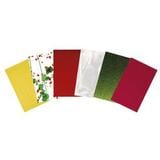
Dicro Slide Sample Set

Dicro Slide Sample Set by Glasshopper
$46.95 USD
free shipping FREE SHIPPING
Item# DS6145   In Stock

  • Add dichroic sparkle to any fused project. Works with all glass COEs
  • Cuts like paper, means no need for glass cutters
  • Six vibrant colors per pack. A great value!

Product Description

A Revolutionary Way to Use Dichroic!
No glass cutting necessary, simply cut with scissors or use a hole punch. The creative possibilities are endless. Best of all, Dicro Slide has no COE and is compatible with all glass. It can be fired between layers of glass or on top of glass. Sample set includes all six colors on 2" x 2" squares, all clearly labeled, along with a handy instruction sheet.

Pack of 6 Colors:

  • Cyan / Copper
  • High Cyan / Copper Red
  • Clear Red
  • Magenta Green
  • Blue Gold
  • Rainbow
Using Dichroic Slide Paper is as Easy as 1, 2, 3!
step1 dichro slide step2 dichro slide step3 dichro slide
1. Cut out your design and soak in water for 1 to 2 minutes. 2. Blot excess water and slide onto your glass. 3. Smooth out and fire at a full fuse.

Delphi Tip: When using with a coated glass, such as dichroic or iridized, make sure to layer with clear glass, giving the Dicro Slide an uncoated glass surface to adhere to.

Projects made with dicro slide. Artists Jaime Dobson and Jen Olsen created the orange tile. Set of three multi-layered tiles by GlassHopper Patterns. Stained glass panel by artist Lanayia Shaw with fired dichroic slide accent pieces.

Customer Reviews

4.8 out of 5 stars
5 star  
  3
4 star
  1
3 star
  0
2 star
  0
1 star
  0
See all 4 customer reviews
Write a customer review

Product Images from Customers

Be the first to share product images with other customers
5 out of 5 stars
  •   Fun way to make art
By on
Pros : I love this stuff. I found it easy to work with. I used a stamp cutter to cut out shapes and put them on glass.
Cons : If pieces are small they can be tricky to work with.
Was this review helpful to you?  
1 of 1 people found this review helpful
5 out of 5 stars
  •   Love it
By on
Pros : Easy to store. Work exactly like a decal
Cons :
Other Thoughts : Colour is true to actual dicro
Was this review helpful to you?  
6 of 10 people found this review helpful
5 out of 5 stars
  •   Great way to sample
By on
Pros : Great way to try out colors without investing a ton
Cons :
Was this review helpful to you?  
9 of 15 people found this review helpful

See all 4 customer reviews
Related Content
My commuting jacket is drying over a kitchen chair, and the cat has come down off the workbench to sniff the sleeve with deep suspicion. Fair enough. Theres a stripe of brown grit up the back, the kind wet roads and mashed leaves throw up all autumn.That grit ends up on brakes too. So heres a short pre-winter check for Defiant riders. Im working from general technique and the JupiterBike product listings, not from my own bike.Why autumn chews through brake padsQuick jargon check. On a disc brake, a metal disc called the rotor is fixed to the wheel hub. Two pads squeeze it to slow you down. They sit in a caliper, the clamp that straddles the rotor.Wet roads carry grit and leaf mush onto the rotor. When you brake, that grit gets trapped between pad and rotor and works like sandpaper, so the same commute wears pads faster