Shop By Category
Take 20% OFF Your Order* - Ends Today

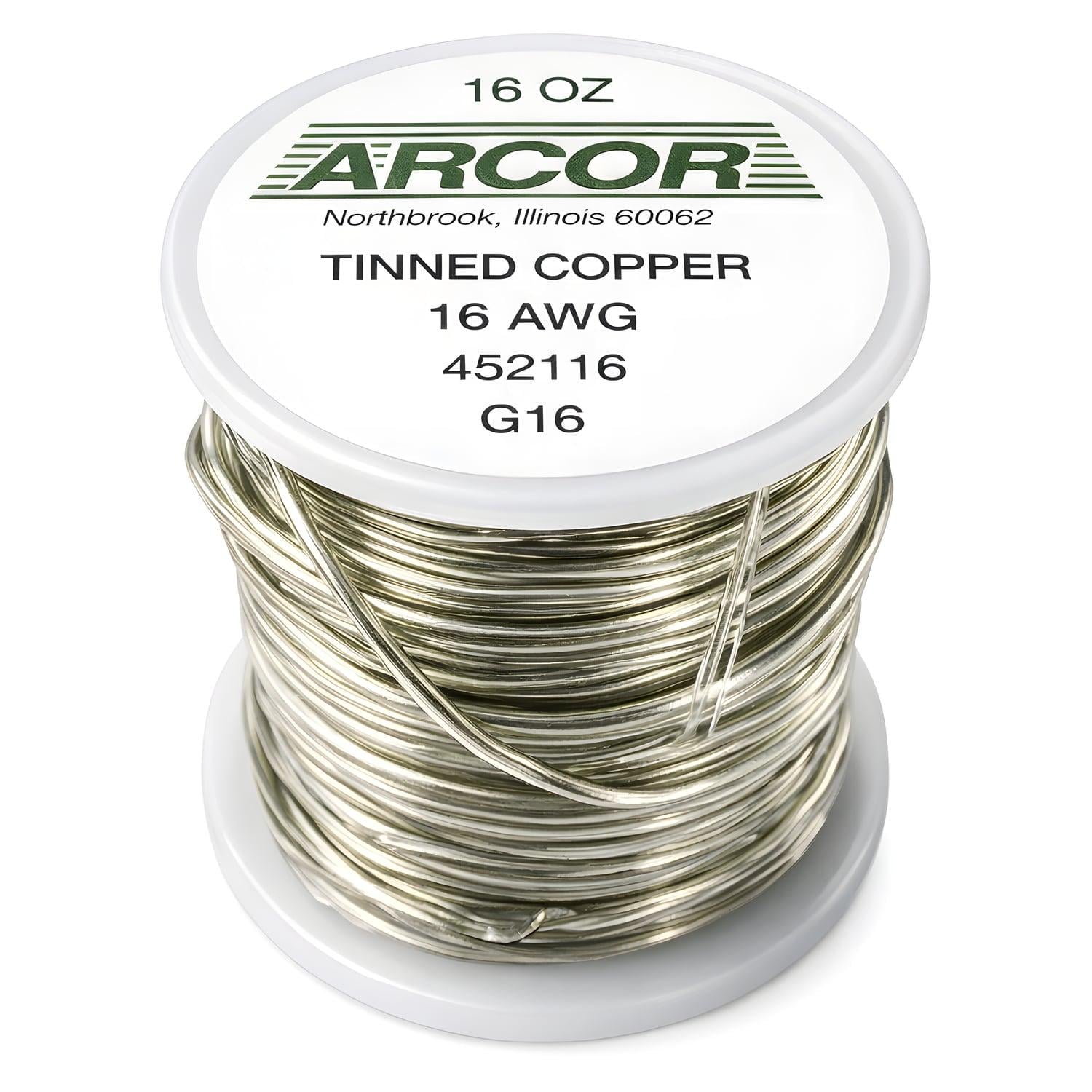
16 Gauge Pre-Tinned Wire - 1 Lb

16 Gauge Pre-Tinned Wire - 1 Lb
$51.95 USD
Item# 452116   In Stock

Product Features

  • Pre-tinned wire has many uses in stained glass, jewelry and soldering projects
  • 16 gauge wire sold in a 1 lb spool


Product Description

The tin layer on tinned wire protects the copper core from oxidizing and accepts solder with minimal cleaning. Silver colored and will accept patina. Use as reinforcement in suncatchers, to make jump rings for glass jewelry, and for applying quick and easy decoration to your soldering. Sold in 1 pound spools. 

Project below from "Pretty Little Things" book #6713.

16 gauge wire is thin enough to use as decorative elements in your glass project or to use for hanging. 16 ga measures 1/20" in diameter.

Customer Reviews

5 out of 5 stars
5 star  
  10
4 star
  0
3 star
  0
2 star
  0
1 star
  0
See all 10 customer reviews
Write a customer review

Product Images from Customers

Be the first to share product images with other customers
5 out of 5 stars
  •   good
By on
Pros : use it all the time. useful to have
Cons :
Was this review helpful to you?  
1 of 3 people found this review helpful
5 out of 5 stars
  •   Perfect for my needs!
By on
Pros : This is 1 pound of pre tinned wire in a continuous length. No waste like you would have with precut wire. The spool is wrapped to keep it from tarnishing in storage.
Cons : None whatsoever!
Other Thoughts : I use a lot of this wire!
Was this review helpful to you?  
3 of 6 people found this review helpful
5 out of 5 stars
  •   Super convenient
By on
Pros : Easy to use , Flux the solder. I save time not having to pre tinned wire.
Cons : None
Other Thoughts : I should have bought a thicker Guage. But this would be excellent for wrapping hinge areas on projects.
Was this review helpful to you?  
2 of 3 people found this review helpful

See all 10 customer reviews
Related Content
My commuting jacket is drying over a kitchen chair, and the cat has come down off the workbench to sniff the sleeve with deep suspicion. Fair enough. Theres a stripe of brown grit up the back, the kind wet roads and mashed leaves throw up all autumn.That grit ends up on brakes too. So heres a short pre-winter check for Defiant riders. Im working from general technique and the JupiterBike product listings, not from my own bike.Why autumn chews through brake padsQuick jargon check. On a disc brake, a metal disc called the rotor is fixed to the wheel hub. Two pads squeeze it to slow you down. They sit in a caliper, the clamp that straddles the rotor.Wet roads carry grit and leaf mush onto the rotor. When you brake, that grit gets trapped between pad and rotor and works like sandpaper, so the same commute wears pads faster

You may also like

item: SBR308
item: SBR400
item: SBRCIN
item: X100SN
Oceanside Clear Satin
Starting at $6.85
item: X100C
Oceanside Clear Cord
Starting at $6.85
item: X100K
Oceanside Clear Krinkle
Starting at $6.85
item: X100HS
Oceanside Clear Small Hammered
Starting at $6.85
item: X100GG
Oceanside Clear Crystal Ice
Starting at $6.85