Shop By Category
Take Up to $150 OFF Your Order - Get Your Coupon

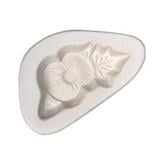
Small Beach Shells Casting Mold

Small Beach Shells Casting Mold by Colour de Verre
$49.95 USD
Only 4 left in stock - order soon.
Item# 77883   In Stock

Product Features

  • Create four shells at once!
  • Suggested fill weights are starfish, 8 grams; scallop, 18 grams; clam, 10 grams; and whelk, 7 grams
  • Ceramic molds can be used many times


Product Description

Colour de Verre Molds are the Simple Way to Cast Glass
Merge the age-old art of pate de verre glass casting with modern technology and contemporary design! Create pieces that are beautiful enough to stand alone or to incorporate into larger projects. The open, hollow design promotes even heating and cooling. Molds can be filled with glass frit, powder, or sheet glass.

Reusable mold casts 4 shells from 1-3/8" to 1-1/2" in one firing, for the ultimate in convenience. The fill weights are starfish, 8 grams; scallop, 18 grams; clam, 10 grams; and whelk, 7 grams. The mold measures 5-1/2" x 5-1/2" x 1-1/4". See size perspective of mold with quarter and dime images shown.

We suggest a cooler than usual firing temperature of about 1290-1310ºF (700-710ºC) for COE 96 and 25ºF (10ºC) hotter for COE 90. Click on the User Manual pdf  to download a free, helpful technique sheet.

Images courtesy of Colour de Verre.

Customer Reviews

5 out of 5 stars
5 star  
  2
4 star
  0
3 star
  0
2 star
  0
1 star
  0
See all customer reviews
Write a customer review

Product Images from Customers

Be the first to share product images with other customers
5 out of 5 stars
  •   Amazing casting mold
By on
Pros : The first time using this mold it came out perfect.
Cons :
Was this review helpful to you?  
3 of 5 people found this review helpful
5 out of 5 stars
  •   fun mold
By on
Pros : nice shapes...easy to use
Cons : none
Was this review helpful to you?  
2 of 5 people found this review helpful

See all customer reviews
Related Content
My commuting jacket is drying over a kitchen chair, and the cat has come down off the workbench to sniff the sleeve with deep suspicion. Fair enough. Theres a stripe of brown grit up the back, the kind wet roads and mashed leaves throw up all autumn.That grit ends up on brakes too. So heres a short pre-winter check for Defiant riders. Im working from general technique and the JupiterBike product listings, not from my own bike.Why autumn chews through brake padsQuick jargon check. On a disc brake, a metal disc called the rotor is fixed to the wheel hub. Two pads squeeze it to slow you down. They sit in a caliper, the clamp that straddles the rotor.Wet roads carry grit and leaf mush onto the rotor. When you brake, that grit gets trapped between pad and rotor and works like sandpaper, so the same commute wears pads faster