Shop By Category
Take 20% OFF Your Order* - Ends Wednesday

Pot Melt Mold Assortment

Pot Melt Mold Assortment
$54.95 USD
Only 6 left in stock - order soon.
Item# 5216   In Stock


Product Description

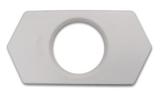
Delphi Exclusive Pot Melt Mold Assortment - 3 Pack
Get all three pot melt mold styles in one kit. Assortment includes one of each; single hole, multi hole and rectangle multi hole. The most economical way to try all the pot melt molds.

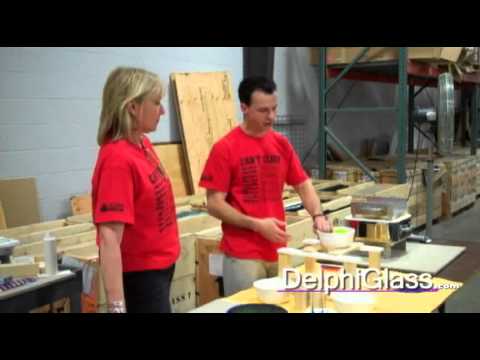
Stack your fusible scrap glass into an exclusive pot melt mold to create dramatic one-of-a-kind marbled glass. Place the mold on top of kiln posts and dams or pot melt support #24698 inside the kiln. Once hot, the glass flows out of the mold and onto the 1/8" fiber paper protecting your kiln shelf. Durable ceramic molds measure 6-1/2" wide by 2-1/2" deep. Includes Delphi Tips and instruction sheet. Click on "View Product Video" to learn more about setting up your pot melt. A Delphi Exclusive.

See how it works (images below):

  1. Place 1/8" fiber paper on level kiln shelf. Elevate pot melt support with kiln posts. Place pot melt mold in support.
  2. Fill your mold with compatible fusible glass.
  3. Fuse, making sure that your glass reaches the maximum temperature to enable the molten glass to flow out of the mold leaving behind as little glass as possible helping to prevent the mold from thermal shocking.
  4. Display your one-of-a-kind pot melt creation, or continue creating by slumping, cold-working, or cutting up your pot melt to use in other fused projects.
For complete instructions and tips click "View User Manual".

Tips on Using Pot Melt Molds
  • Work on a level kiln shelf.
  • Do NOT kiln wash pot melt molds.
  • Experiment using different slumping molds instead of kiln shelves to melt glass onto. The glass will take the shape and texture of the mold you choose.
  • There is no way to get all the glass out of the mold. However if you layer clear in the bottom first with your colors on top you'll have less mixing of colors when you do a new project.
  • Not intended for use in table top kilns.


Fused plate below created by Delphi artist Val Oswalt-De Waard using Pot Melt Mold #24692.

Customer Reviews

4.3 out of 5 stars
5 star  
  2
4 star
  0
3 star
  1
2 star
  0
1 star
  0
See all 3 customer reviews
Write a customer review

Product Images from Customers

Be the first to share product images with other customers
5 out of 5 stars
  •   Tried and true
By on
Pros : Produces beautiful one of a kind glass that can then be used to creat one of a kind pieces. I slumped mine, had it posted for less than a day a sold for more than I imagined. Best tip I got was to use at least 40% to 50% clear glass to get the best results.
Cons : There’s a lot of experimentation to get the glass flowing right without breaking the bowl. Primary adjustments are in the holding time. You have to experiment with the amount of glass to use so you don’t ruin your kiln or kiln.
Other Thoughts : What a great way to make use of scrap glass.
Was this review helpful to you?  
3 of 3 people found this review helpful
3 out of 5 stars
  •   Pot melts
By on
Pros :
Cons :
Was this review helpful to you?  
5 out of 5 stars
  •  
By on
Pros :
Cons :
Was this review helpful to you?  

See all 3 customer reviews
Related Content
We found Mollie Barrow on Facebook in the midst of a discussion on Pot Melts. Mollie cooks up her incredible glass creations in a quiet eco-village in rural Ireland with her 10-year old son Elliot and cats Bonnie and Oscar. She is continually inspired by the Northern Lights, and the rich swirls of color in her pieces prove it. We were blown away by her magical melts, and we know you will be too. How did you get started in glass? Ive been in love with glass art since I visited the Murano Glass Factory in Venice when I was 16. I was hypnotised by the skill and speed those guys had working with molten glass, and I would have loved to pursue glass seriously from then. As is often the case, however, life had other plans and it wasnt until I was in my late 20s that I
My commuting jacket is drying over a kitchen chair, and the cat has come down off the workbench to sniff the sleeve with deep suspicion. Fair enough. Theres a stripe of brown grit up the back, the kind wet roads and mashed leaves throw up all autumn.That grit ends up on brakes too. So heres a short pre-winter check for Defiant riders. Im working from general technique and the JupiterBike product listings, not from my own bike.Why autumn chews through brake padsQuick jargon check. On a disc brake, a metal disc called the rotor is fixed to the wheel hub. Two pads squeeze it to slow you down. They sit in a caliper, the clamp that straddles the rotor.Wet roads carry grit and leaf mush onto the rotor. When you brake, that grit gets trapped between pad and rotor and works like sandpaper, so the same commute wears pads faster