Shop By Category
Take 20% OFF Your Order* - Ends Today

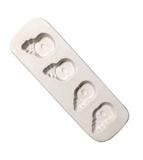
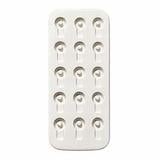
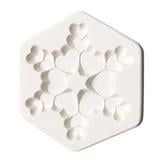
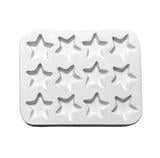
Small Twelve Hearts Casting Mold

Small Twelve Hearts Casting Mold by Creative Paradise
$49.95 USD
Item# 80461   In Stock

  • Create 12 castings in one firing!
  • Make great little pocket companions - the perfect worry stone!
  • Ceramic molds can be used many times
  • Mold measures 8" x 8" x 1-1/2" deep


Product Description

Create dazzling, detailed cast glass hearts. Simply fill the mold with glass frit, scrap, and powders to make one-of-a-kind glass castings. These pieces are beautiful enough to stand alone or to incorporate into larger sculptural projects. 

Ceramic mold can be used many times. Coat with casting primer before using. Mold makes 12 hearts. Mold measures 8" x 8" x 1-1/2" deep. Castings measure 1-1/4" x 1-1/4" with a 15 gram fill weight.

Project image and firing schedules below courtesy of Creative Paradise Inc.

Refer to the table below for a suggested Full Fuse schedule for COE96 glass:

Segment Rate Temp (F) Hold
1 300 1150 45
2 150 1300 20
3 400 1460 10
4 9999 950* 60
*If using COE90, adjust this temperature to 900

Refer to the table below for a suggested Tack Fire schedule for COE96 glass:
(If fusing to a Tack Fire, we recommend using Powder and Fine frit, and filling uniformly 1/4" full)
Segment Rate Temp (F) Hold
1 300 1150 45
2 150 1300 20
3 400 1410 10
4 9999 950* 60
*If using COE90, adjust this temperature to 900

Customer Reviews

5 out of 5 stars
5 star  
  1
4 star
  0
3 star
  0
2 star
  0
1 star
  0
See all customer reviews
Write a customer review

Product Images from Customers

Be the first to share product images with other customers
5 out of 5 stars
  •   Mini Hearts
By on
Pros : It is the perfect size for a small heart.
Cons : The first time I had some trouble with priming the mold. The Boron Nitride did not evenly cover the hearts, and when I took them out of the mold, a few of them had boron residue on them. I cleaned off the mold, and reapplied the Boron Nitride. The second time, things worked much better. But on on of the hearts, the primer was crackled, and so I didn't use that heart. All the the others came out perfectly.
Was this review helpful to you?  
2 of 2 people found this review helpful

See all customer reviews
Related Content
My commuting jacket is drying over a kitchen chair, and the cat has come down off the workbench to sniff the sleeve with deep suspicion. Fair enough. Theres a stripe of brown grit up the back, the kind wet roads and mashed leaves throw up all autumn.That grit ends up on brakes too. So heres a short pre-winter check for Defiant riders. Im working from general technique and the JupiterBike product listings, not from my own bike.Why autumn chews through brake padsQuick jargon check. On a disc brake, a metal disc called the rotor is fixed to the wheel hub. Two pads squeeze it to slow you down. They sit in a caliper, the clamp that straddles the rotor.Wet roads carry grit and leaf mush onto the rotor. When you brake, that grit gets trapped between pad and rotor and works like sandpaper, so the same commute wears pads faster