Shop By Category

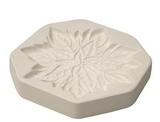
Iris Flower Bottom Mold

Iris Flower Bottom Mold by Creative Paradise
$35.95 USD
Item# 806139   In Stock

Product Features

  • Create an indoor garden – no watering needed!
  • 3-dimensional ceramic mold can be fired many times
  • Makes life-like flowers with ruffled petals like irises


Product Description

Create beautiful bouquets and show stopping garden accents! Iris Flower Bottom Mold is ideal for making ruffled Iris. Ceramic molds can be fired many times. Must be kiln washed before use. See size perspective of mold with quarter and book images shown. Measures 6" diameter by 2-3/4" high.

Step-By-Step: Slumping 3-D Flowers
     
Step 1. Trace the slumping mold onto a piece of paper, so you know how large your glass can be. Begin arranging glass on this pattern, starting with the flower base glass. Step 2. Arrange flower petal glass in layers and fuse. Step 3. Arrange the fused flower on top of the mold and slump.

Find projects that incorporate this mold in the Fused Glass Flowers Book #806140. Images courtesy of Creative Paradise. Last image display a flower created with this mold.

Customer Reviews

5 out of 5 stars
5 star  
  3
4 star
  0
3 star
  0
2 star
  0
1 star
  0
See all 3 customer reviews
Write a customer review

Product Images from Customers

Be the first to share product images with other customers
5 out of 5 stars
  •   Great vfor flowers
By on
Pros : Nice shape for flowers
Cons :
Was this review helpful to you?  
2 of 5 people found this review helpful
5 out of 5 stars
  •   Lovely
By on
Pros : If you like making 3D flowers this is a studio must have for trumpeter shaped blossoms.
Cons :
Other Thoughts : The mold was packed well and arrived in perfect condition.
Was this review helpful to you?  
3 of 6 people found this review helpful
5 out of 5 stars
  •   realistic
By on
Pros : This is a great mold, it gives beautiful realistic iris flowers when used with the cone mold for the top section
Cons : You need to be careful with the placement of the petals for the first fusing to ensure they sit correctly
Was this review helpful to you?  
7 of 10 people found this review helpful

See all 3 customer reviews
Related Content
My commuting jacket is drying over a kitchen chair, and the cat has come down off the workbench to sniff the sleeve with deep suspicion. Fair enough. Theres a stripe of brown grit up the back, the kind wet roads and mashed leaves throw up all autumn.That grit ends up on brakes too. So heres a short pre-winter check for Defiant riders. Im working from general technique and the JupiterBike product listings, not from my own bike.Why autumn chews through brake padsQuick jargon check. On a disc brake, a metal disc called the rotor is fixed to the wheel hub. Two pads squeeze it to slow you down. They sit in a caliper, the clamp that straddles the rotor.Wet roads carry grit and leaf mush onto the rotor. When you brake, that grit gets trapped between pad and rotor and works like sandpaper, so the same commute wears pads faster