Shop By Category

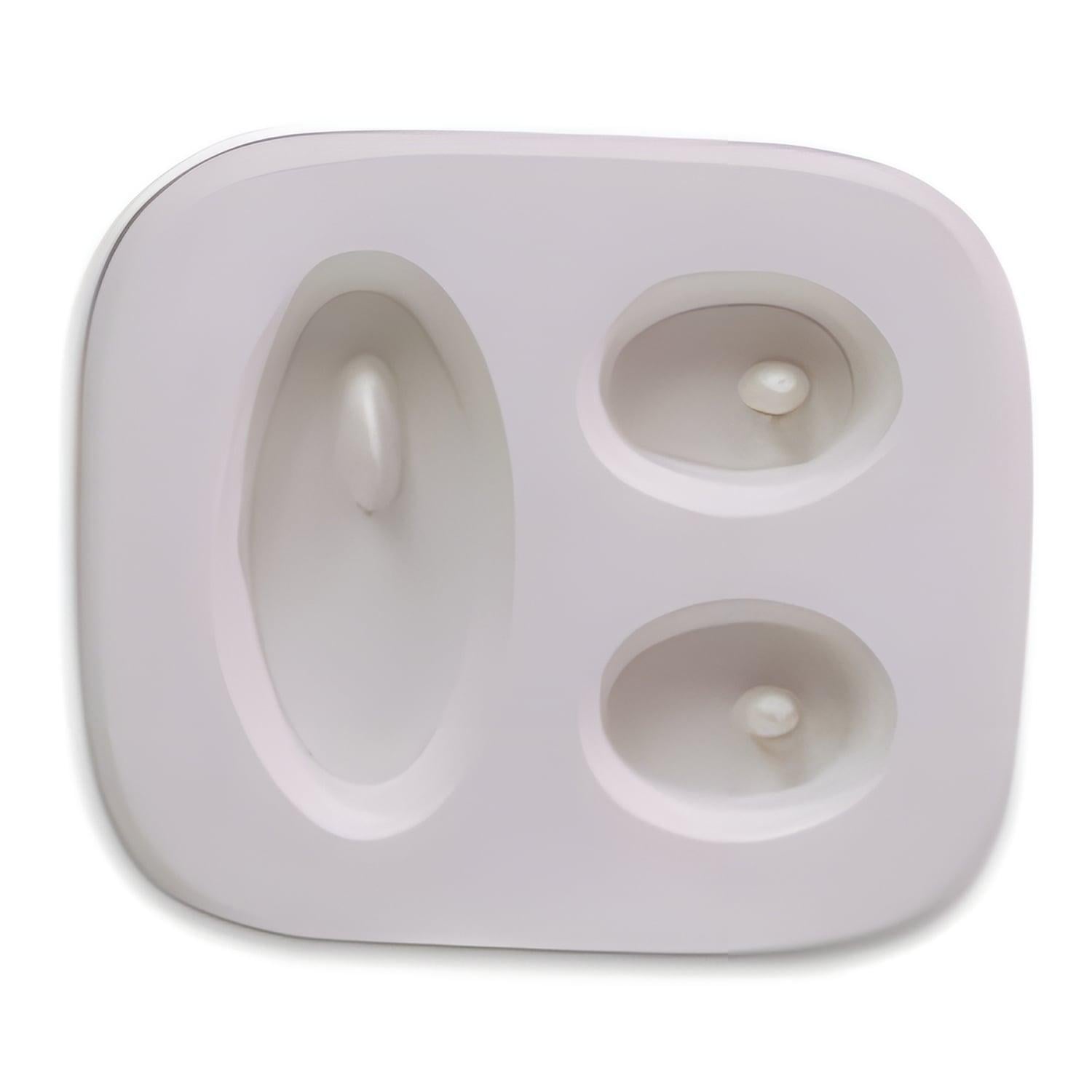
Oval Trio Earring & Pendant Jewelry Mold

Oval Trio Earring & Pendant Jewelry Mold by Creative Paradise
$29.95 USD
Only 8 left in stock - order soon.
Item# 80750   In Stock

Product Features

  • Fits in small kilns
  • Ceramic molds can be used many times
  • Creates unique glass jewelry sets in 1 firing
  • Finished pendant measures 1" wide x 2" long
  • Finished earrings measure 3/4" wide x 1-1/8" long


Product Description

Create Cast Glass Pendants and Earrings
Fill pendant molds with glass frit, scrap and powders to create one-of-a-kind cast glass jewelry sets. Try combining powders to create a marbled look or accent with dichroic. The possibilities are endless!

Coat molds with ZYP or casting mold primer before use. See size perspective of mold with quarter and dime images shown. Mold measures 3" wide x 3-1/2" long. Finished pendant measures 1" at the widest point x 2" long. Finished earrings measure 3/4" at the widest point x 1-1/8" long. Durable ceramic molds can be used many times. 

Mold uses 10 grams of frit or scrap glass in large oval and 4 grams in each small oval. 

Images courtesy of Creative Paradise Inc.

Delphi Tip: The amount of frit added into the mold defines the shape of the finished piece. For detailed designs, use a generous amount of frit.

Customer Reviews

4.3 out of 5 stars
5 star  
  1
4 star
  2
3 star
  0
2 star
  0
1 star
  0
See all 3 customer reviews
Write a customer review

Product Images from Customers

Be the first to share product images with other customers
5 out of 5 stars
  •  
By on
Pros :
Cons :
Was this review helpful to you?  
6 of 12 people found this review helpful
4 out of 5 stars
  •   Nice mold...if you are careful
By on
Pros : If you use MR97 and the proper fill (don't overfill) this mold yields lovely pendants and earrings.
Cons : Does not work well with kiln wash. Use MR 97, but I find this to be true for all the molds with posts.
Was this review helpful to you?  
9 of 14 people found this review helpful
4 out of 5 stars
  •   Bumps
By on
Pros : Nice mold shape
Cons : There was some finger print smears on the inside of the mold. Just not as perfect as the other 2 I bought
Other Thoughts : Pay attention to your fill amounts it makes a difference
Was this review helpful to you?  
4 of 7 people found this review helpful

See all 3 customer reviews
Related Content
My commuting jacket is drying over a kitchen chair, and the cat has come down off the workbench to sniff the sleeve with deep suspicion. Fair enough. Theres a stripe of brown grit up the back, the kind wet roads and mashed leaves throw up all autumn.That grit ends up on brakes too. So heres a short pre-winter check for Defiant riders. Im working from general technique and the JupiterBike product listings, not from my own bike.Why autumn chews through brake padsQuick jargon check. On a disc brake, a metal disc called the rotor is fixed to the wheel hub. Two pads squeeze it to slow you down. They sit in a caliper, the clamp that straddles the rotor.Wet roads carry grit and leaf mush onto the rotor. When you brake, that grit gets trapped between pad and rotor and works like sandpaper, so the same commute wears pads faster