Shop By Category
Take 20% OFF Your Order* - Ends Wednesday

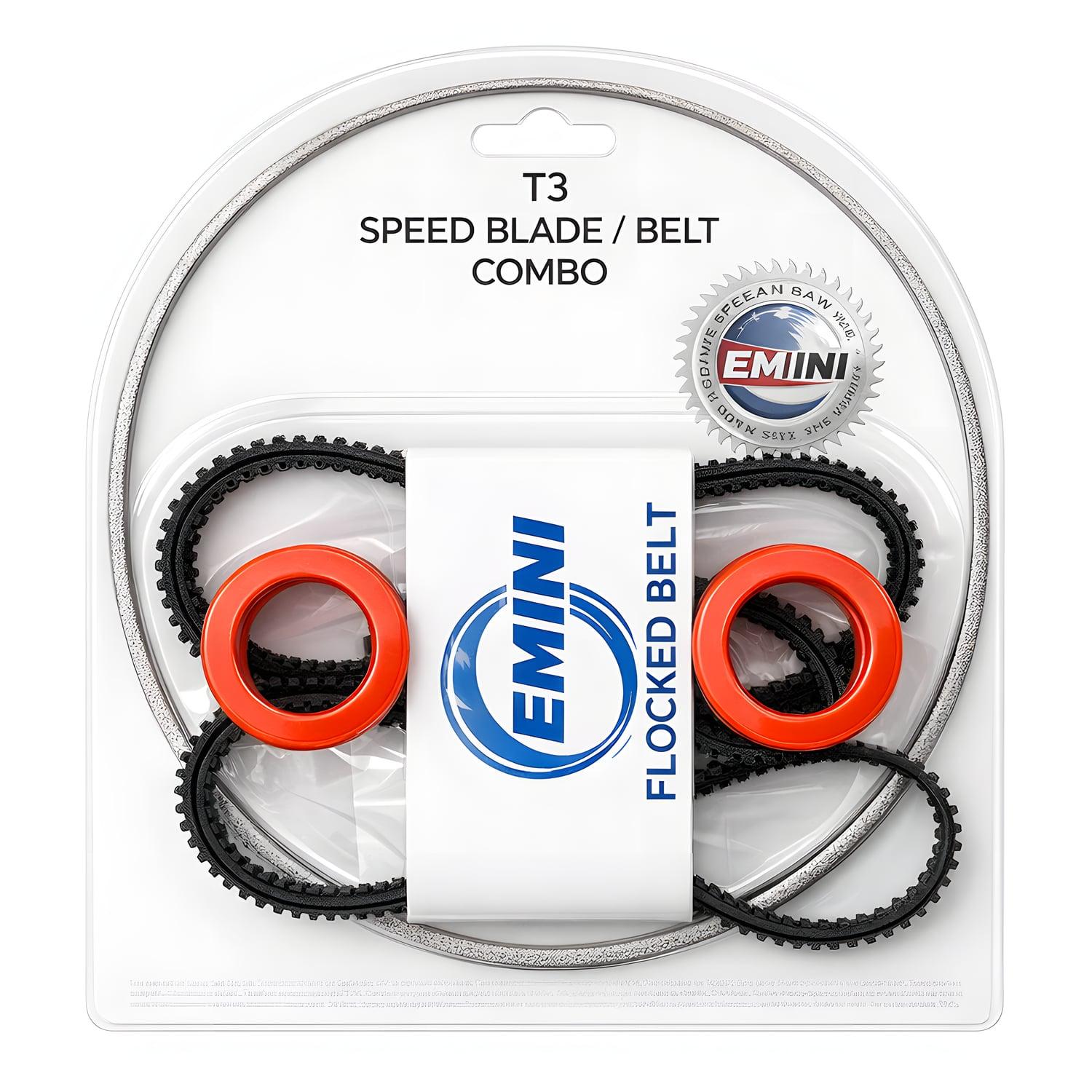
Taurus 3 Speed Blade

Taurus 3 Speed Blade by Gemini Saw Company
$179.95 USD
Only 2 left in stock - order soon.
free shipping FREE SHIPPING
Item# 57016   In Stock

Product Features

  • Inverted teardrop shape makes it extremely fast
  • Fits the Taurus 3 Ring Saw
  • Includes one blade, flocked belt and two red grommets


Product Description

For Ultimate Speed with Your Saw
The blade's innovative design uses a narrower profile, making it the most aggressive blade available for the Taurus 3 saw. Cut faster than ever, and with the same precision you are accustomed to with quality Gemini products. Blade includes grommets and a special heavy duty flocked belt that offers extra reinforcement for use with the Speed Blade or Slicer Blade.

  • Blade Shape: Inverted Tear Drop .055 inside x .150 (front to back). The outside is pointed.
  • Grit is aggressive.
  • Material Thickness Capacity: 3/4". Normal use is fused glass, stained glass, ceramic tile and/or stone. (Note: you will have to remove the stabilizer foot to use the full 3/4" capacity.)
  • What to Avoid: Do not cut thin dichroic glass; it will chip easily.
  • Demonstrate to students its action prior to letting them use it. Explain the inverted tear drop shape and directionally dependent speeds (faster when pushing, slower when pulling, slowest sideways).
  • Average Blade Life: 50-100 hours
There are universal truths about all Taurus 3 ring saw blades:
  1. All blades cut the same materials: glass, tile, stone, shell, nonferrous metals, hard plastics such as acrylic and polycarbonate, and anything that has a similar density to these materials.
  2. All blades use the same belt and grommets. Blades are interchangeable with the same belt and grommets and do not need to be changed unless they are excessively worn.
  3. Always let the blade do the cutting. Forcing the blade through the material in a hurry will not only cause a slower cut but can also shorten the blade life. There is an optimum speed for each blade in each material; you can feel it while you are cutting. Sensitivity to this causes extremely long blade life. Defined, it is the point at which you get maximum cutting speed for minimal pressure.

Customer Reviews

5 out of 5 stars
5 star  
  3
4 star
  0
3 star
  0
2 star
  0
1 star
  0
See all 3 customer reviews
Write a customer review

Product Images from Customers

Be the first to share product images with other customers
5 out of 5 stars
  •   3 speed blade
By on
Pros :
Cons :
Other Thoughts : items not used
Was this review helpful to you?  
1 of 2 people found this review helpful
5 out of 5 stars
  •   3.0 speed blade
By on
Pros : WOW! Great to use blade. Why didn't I switch to this sooner? Super fast, smooth cutting. Like previous review, almost like machine is new. Much smaller kerf (gap). Can use side of blade like a grinder to perfect edges not cut. Liked being able to fully see my cutting line again, since it doesn't need that adapter to keep from wobbling like regular blade does. Cut 20 Cardinals wings in a FRACTION of time it take to cut a couple with normal blade!
Cons : Wonder how long it lasts since you only really go from the front on cutting instead of all around. From back is MUCH slower (like normal blade) and wobbles a bit. A little tight to initially get in the channel when installing.
Other Thoughts : Should probably include instruction on set up. Not sure if I'm supposed to use the stability adapter or not, but found blade pretty stable without it. If lasts long enough to justify expense, will definitely buy again!!!!
Was this review helpful to you?  
17 of 19 people found this review helpful
5 out of 5 stars
  •   Go back to 3.0 Speed Blade - Great
By on
Pros : Speeds up cutting, made my saw cut much better and faster than new!
Cons : Since the blade is shaped the way it is, it doesn't pivot the way round ones do when you change direction.
Was this review helpful to you?  
15 of 17 people found this review helpful

See all 3 customer reviews
Related Content
My commuting jacket is drying over a kitchen chair, and the cat has come down off the workbench to sniff the sleeve with deep suspicion. Fair enough. Theres a stripe of brown grit up the back, the kind wet roads and mashed leaves throw up all autumn.That grit ends up on brakes too. So heres a short pre-winter check for Defiant riders. Im working from general technique and the JupiterBike product listings, not from my own bike.Why autumn chews through brake padsQuick jargon check. On a disc brake, a metal disc called the rotor is fixed to the wheel hub. Two pads squeeze it to slow you down. They sit in a caliper, the clamp that straddles the rotor.Wet roads carry grit and leaf mush onto the rotor. When you brake, that grit gets trapped between pad and rotor and works like sandpaper, so the same commute wears pads faster

You may also like

item: 6914
Ultimate Cutter's Mate Starter Kit
$599.95 $539.95
$60.00 off
item: 5112
Cutter's Mate
$329.95 $279.95
16% off
item: 5426
Beetle Bits Cutting System
$129.95 $109.95
16% off
item: 5424
Waffle Grid Work Surface - 6 Pack
$89.95 $66.95
26% off
item: 5136
Circle Pro 12
$159.95 $129.95
19% off
item: 5118K
Cutter's Mate Strip Pro Kit
$229.95 $199.95
$30.00 off
item: 5114
Cutter's Mate Plus
$369.95 $299.95
19% off
item: 54254
Waffle Grid Work Surface - 4 Pack
$63.95 $46.95
27% off
item: 5128
Circle Pro 24
$209.95 $169.95
20% off