Shop By Category
Take 20% OFF Your Order* - Ends Wednesday

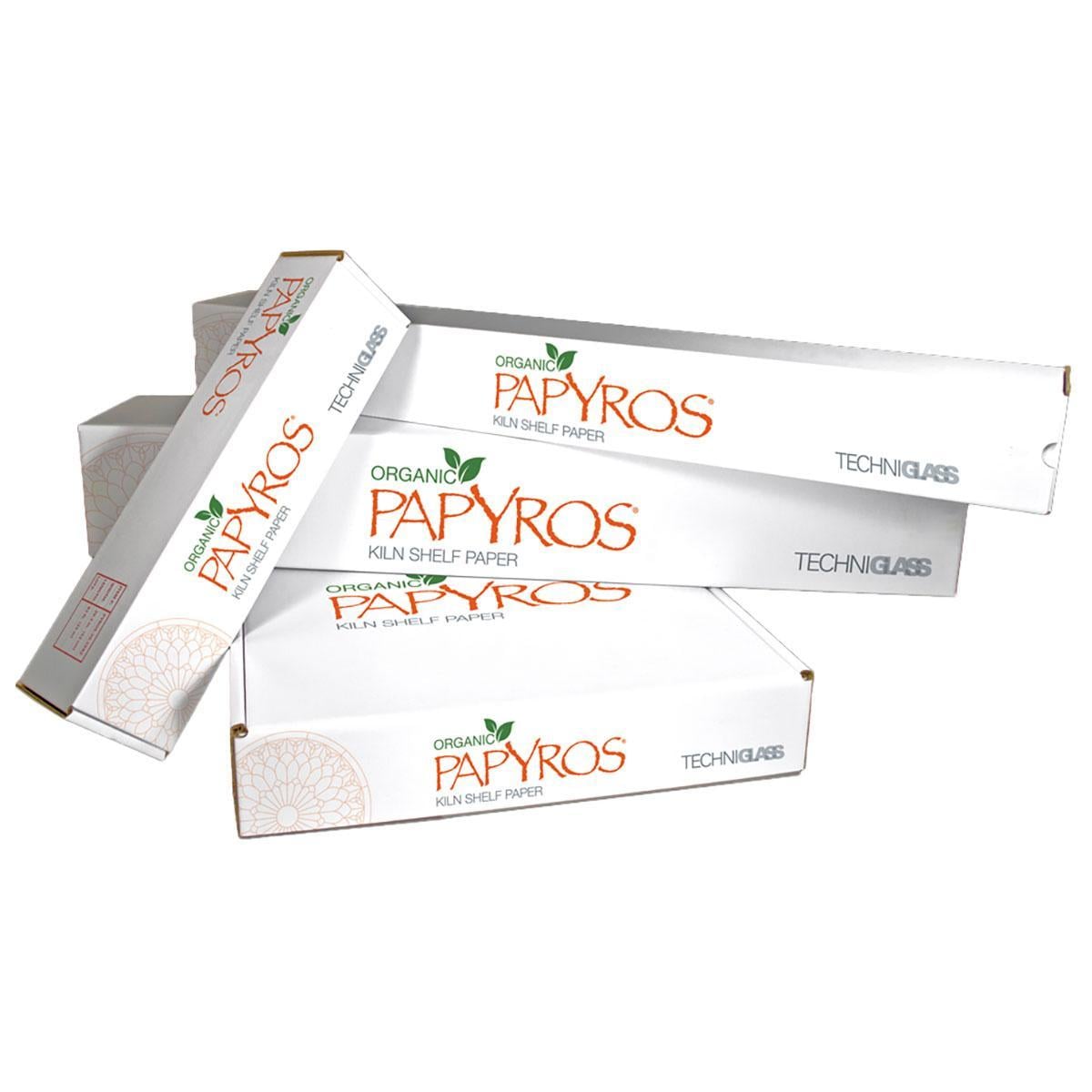
Papyros Shelf Paper - 20-1/2" x 20-1/2" Sheet

Papyros Shelf Paper - 20-1/2" x 20-1/2" Sheet by Techniglass
$5.95 USD
Buy 3 or more for $4.95 each
Item# 54720   In Stock

Product Features

  • Sturdy, ceramic-based paper is specially formulated for glass fusing
  • Provides excellent glass/kiln shelf separation at temperatures up to 1600°F
  • No dust, no mess, easy to fold and dispose
  • Sheet measures 20-1/2" x 20-1/2"
  • Sold individually


Product Description

Organic PAPYROS Kiln Shelf Paper is the gold standard - trusted, reliable, and unmatched in performance. There’s no mixing, no drying, no dust, and no mess. Just cut it to size, place it on your kiln shelf, and start firing. Each piece gives you a perfect release every time, keeping glass from sticking, even at full-fuse temperatures. Because it’s naturally porous, air moves freely to help prevent bubbles from forming between your glass and the shelf. The smooth surface protects your work from breaking or pulling apart and also helps extend the life of your kiln shelf. After firing, PAPYROS stays intact - no crumbling, no sweeping - just fold it up and toss it away. Clean, easy, and ready for your next creation. Available in a range of sizes for artists at every level.

Organic PAPYROS Kiln Shelf Paper is a ceramic-based paper specially formulated for glass fusing. It is ideal to for the majority of fusing projects up to 1600°F. PAPYROS provides excellent glass/kiln shelf separation. Sheet measures 20-1/2" x 20-1/2". Sold individually.

Customer Reviews

5 out of 5 stars
5 star  
  15
4 star
  0
3 star
  0
2 star
  0
1 star
  0
See all 15 customer reviews
Write a customer review

Product Images from Customers

Be the first to share product images with other customers
5 out of 5 stars
  •   Great Paper
By on
Pros : I can get 2-3 uses out of this shelf paper if it is not disturbed between firings
Cons : be sure to use your safety gear when using shelf paper
Other Thoughts : I save any scraps to utilize for pocket vases and on the edges of molds when there may be an issue with edges.
Was this review helpful to you?  
3 of 3 people found this review helpful
5 out of 5 stars
  •   Love this Stuff
By on
Pros : Lots cleaner to work with. slides right off when it's time to change to a new sheet without powder flying everywhere. Does last through more firings. leaves nice finish on glass.
Cons : none
Other Thoughts : Getting a floor model kiln in a couple weeks to augment my table top. Since it is WAY deeper, it will be nice to not have all the paper dust all over the place to clean out.
Was this review helpful to you?  
1 of 1 people found this review helpful
5 out of 5 stars
  •   papyros paper
By on
Pros : Papyros paper lasts me thru 3, sometimes 4 firings most times. It does not get all powdery.
Cons : It does leave the bottom of the glass a bit rougher than thinfire paper.
Was this review helpful to you?  
1 of 1 people found this review helpful

See all 15 customer reviews
Related Content
My commuting jacket is drying over a kitchen chair, and the cat has come down off the workbench to sniff the sleeve with deep suspicion. Fair enough. Theres a stripe of brown grit up the back, the kind wet roads and mashed leaves throw up all autumn.That grit ends up on brakes too. So heres a short pre-winter check for Defiant riders. Im working from general technique and the JupiterBike product listings, not from my own bike.Why autumn chews through brake padsQuick jargon check. On a disc brake, a metal disc called the rotor is fixed to the wheel hub. Two pads squeeze it to slow you down. They sit in a caliper, the clamp that straddles the rotor.Wet roads carry grit and leaf mush onto the rotor. When you brake, that grit gets trapped between pad and rotor and works like sandpaper, so the same commute wears pads faster